back to the blog
Should You Do Your CBT on an Automatic or a Manual?

Alex K · June 10, 2026
There's some confusion among learners about whether to book their CBT training on a manual bike, or a automatic bike. Generally speaking, if you're planning to get your full motorcycle licence eventually, learn on a manual. If you just want to complete your CBT and get riding as soon as possible, an automatic is a perfectly valid starting point. But, there are some caveats and considerations.
- What's the difference between an automatic and a manual motorcycle?
- Does it matter which you choose for your CBT?
- What are the advantages of learning on an automatic?
- What are the advantages of learning on a manual?
- How does your choice affect your full motorcycle licence?
- What if I completed my CBT on an automatic but want to ride a manual?
- So which should you choose?
What's the difference between an automatic and a manual motorcycle?
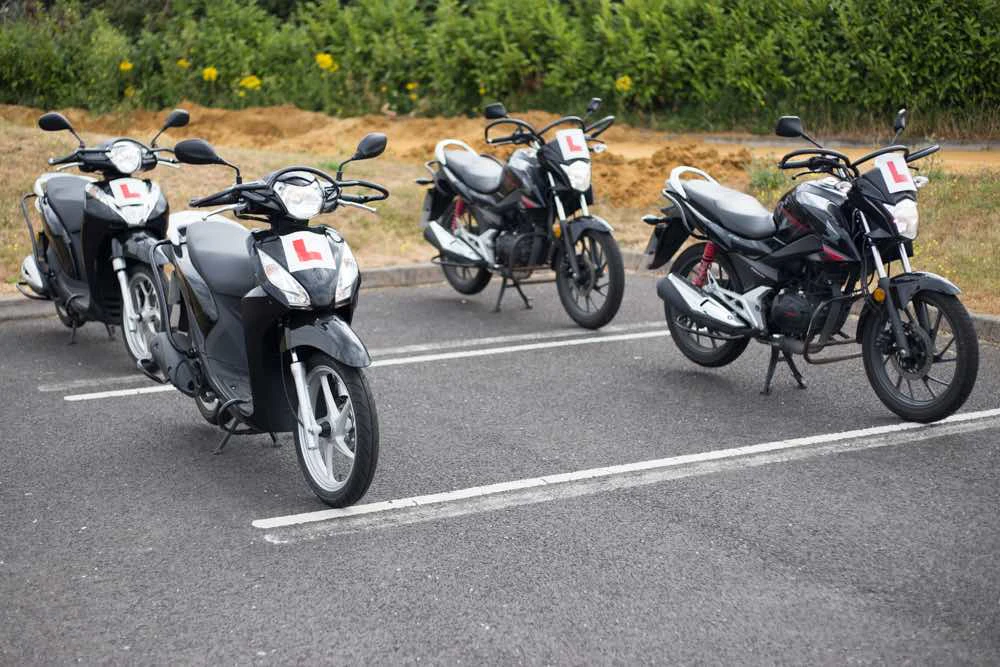
An automatic motorcycle has no clutch or gear lever. You control the throttle and brakes, and the bike handles gear changes itself. Automatic bikes available for CBT training are 'twist-and-go' machines where you roll the throttle and go, without needing to think about gear selection at all.
A manual motorcycle has a hand-operated clutch on the left handlebar and a foot-operated gear lever on the left side of the bike. Changing gear requires you to pull the clutch in, select the gear with your foot, and release the clutch smoothly while managing the throttle. The vast majority of motorcycles are manual, particularly bigger machines. Getting it right takes a bit of practice, but most candidates pick it up quickly.
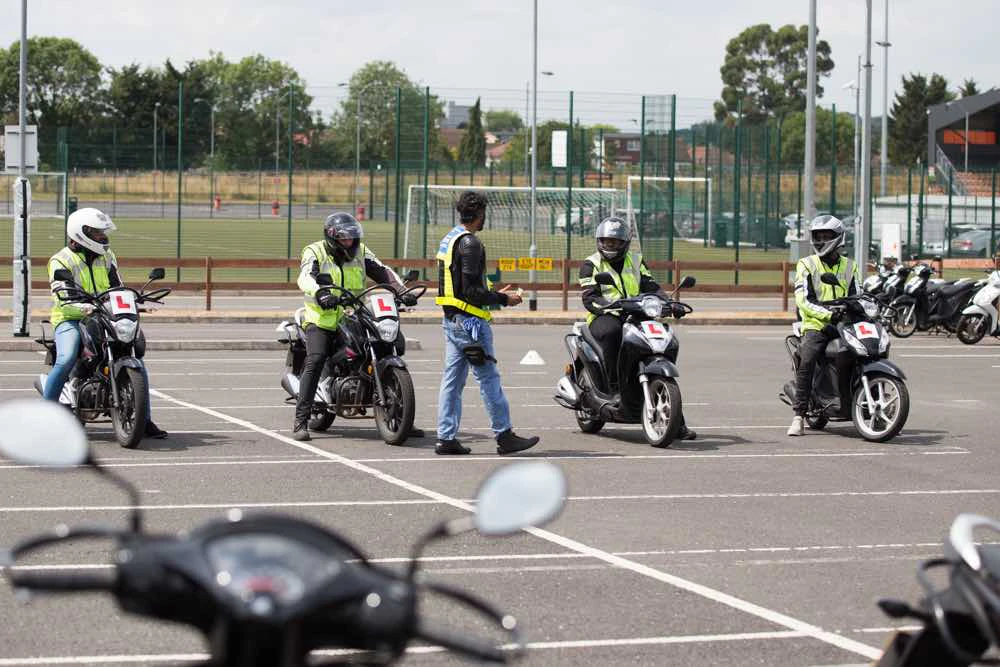
Both types are used in CBT training across the UK. Which one you ride depends on what you select during booking, based on what you choose. More on that below.
Does it matter which you choose for your CBT?
For the CBT certificate itself, no.
Your certificate is the same regardless of whether you trained on an automatic or a manual. Compulsory Basic Training (CBT) is defined by five DVSA elements, and completing all five to your instructor's satisfaction is what earns you the certificate. The gearbox type you trained on is not recorded on the DL196 certificate you receive.
In practical terms, this means that once you've completed your CBT on a scooter, you are technically permitted to ride a manual 125cc motorcycle on the road under your provisional licence. RideTo strongly recommends taking a Gear Conversion course before doing so. Clutch control on a manual bike is a genuine skill, and riding one on public roads without having practised it first is a real safety risk.
A CBT is the first step to riding legally on UK roads. Book your training today on an auto or manual.
BOOK CBTWhat are the advantages of taking a CBT on an automatic?
Automatic motorcycles are easier to learn to ride, simply because you don't have to learn the gears.
Without a clutch or gear lever to manage, you can focus on balance, positioning, braking, and reading the road. For most people, the on-site manoeuvres section of the CBT goes more smoothly on an automatic, and the road ride feels less mentally demanding.
For riders nervous about the mechanical side of motorcycling, starting on an automatic removes one of the most common early sticking points. Clutch control is a learnable skill, but it takes time. If the goal is to get confident on two wheels as quickly as possible, an automatic does that job well.
What are the advantages of taking a CBT on a manual?
Manual motorcycles are the industry standard. The vast majority of bikes you'll encounter on UK roads, from learner 125cc machines to A2-category middleweights to full-sized A licence bikes, are manual. Learning on a manual from the start means you're building the skills you'll use on virtually every motorcycle you'll ever ride.
Manual bikes also give you more control at speed. Being able to select the right gear for a situation, engine brake into corners, or hold revs on a hill gives you a level of precision automatics don't offer. That's not something you'll think about on your first day on a 125, but it matters as you progress.
Riders who've driven a manual car for years often find clutch control less intimidating than they expected. CBT instructors cover it methodically, and many learns who start on a manual get through their CBT without the gearbox causing significant problems.
How does your choice affect training for a full licence?
The gearbox question gets more serious when you take your full motorcycle licence test. The DVSA's Module 1 and Module 2 tests are available on both automatic and manual motorcycles, and whichever type you test on determines what your full licence covers.
If you pass your Module 2 on a manual motorcycle, your full licence covers both automatic and manual bikes — no restrictions.
If you pass on an automatic, your full licence carries a permanent automatic-only restriction. You would need to retake and modules on a manual motorcycle to remove that restriction.
IMPORTANT
Passing your full motorcycle licence test on an automatic permanently restricts your licence to automatics only. If you think you might want to ride a manual motorcycle at any point in the future, train on a manual and take your test on one.
This is the bit that catches people out most often. If you complete your CBT on an automatic because it seemed easier at the time, that doesn't lock you into anything permanently — you can still train on a manual before your full test. But if you take the full test itself on an automatic, the restriction is there for good unless you retake the test.
What if I completed my CBT on an automatic but want to ride a manual?
We generally recommend people take gear training if they gained their CBT on an auto.
The Gear Conversion course is a two-hour practical session for riders who completed their CBT on an automatic scooter and want to get proper training on a manual before riding one on public roads.
GEAR CONVERSION COURSE
- Who it's for: Riders who completed CBT on an automatic and want to ride a manual motorcycle
- Duration: 2 hours, max 2 students per instructor
- What it covers: Clutch control at slow speed, pulling away and stopping smoothly, gear changes across different scenarios
- What you need: A valid CBT certificate and provisional licence
You'll still ride on the road under your existing CBT certificate. But after a gear conversion course, you'll have the confidence and technique to ride a manual safely, so you're not figuring it out in live traffic for the first time.
So which should you choose?
It depends on what you want to do with the bike!
If you want a full motorcycle licence and the freedom to ride anything, learn on a manual from the start. The clutch is a learnable skill and CBT instructors teach it well. Training on a manual for your CBT and staying on one through Module 1 and Module 2 means you get to a full unrestricted licence without having to circle back.
If you want to complete your CBT and start commuting or getting around town on a 125cc scooter, an automatic is a solid choice. It's simpler on day one, it suits city riding well, and the certificate is the same either way. You're not closing any doors, you're just making the first step easier. If you later want to ride a manual, the Gear Conversion course is there.
The one to avoid: taking your full licence test on an automatic to make it easier, then later wishing you hadn't. That restriction is permanent. If the full licence is where you're heading, train on a manual and test on one.
Already got your CBT? The next step is your full licence — find A1, A2 or full training near you.
FIND A COURSE