back to the blog
Lime bike vs scooter: which is better for getting across London?

James B · February 26, 2026
If your commute feels like a daily obstacle course, you’ve probably looked at two obvious escape routes: grab a Lime bike and pedal through the traffic, or get on a scooter and glide past it. Both can be quicker than public transport on the wrong day. They just win in different ways.
We put the idea to a simple test: a real ride across London, Hammersmith to Soho Square, one person on a Lime bike and one on a scooter. Not a perfect experiment, just the kind of journey loads of people do in real life. Here’s what it shows, and how to choose the right option for your commute.
The quick comparison
Lime bike advantages
- Easy to start, no training or licence
- Often cheapest for occasional trips
- Great when your route has strong cycle lanes
- Adds exercise into your day
Scooter advantages
- Usually faster and more consistent in mixed traffic
- Less effort, so you arrive without the sweat
- Works well on normal roads, not just cycle routes
- Filtering can help you keep moving in congestion
Are Lime bikes or scooters safer?
Both can be safe, but the risks are different, and a lot depends on where and how you ride.
Lime bikes can feel safer when you have protected cycle lanes because you spend less time mixing directly with cars and buses. If your route includes cycle superhighways or separated lanes, the ride can feel calmer and more predictable.
The downside is that not every road is cycle-friendly. Bus lanes, narrow gaps, potholes, parked cars, and junctions can turn a calm ride into a stressful one quickly. You are also lighter and less visible, so you rely heavily on positioning and anticipation.
Scooters sit in a different place. You’re typically moving at traffic speed and taking part in the same flow as other motor vehicles. That can reduce certain cyclist-specific risks, but it also means the consequences of mistakes can be higher. The biggest safety boost scooters have is not speed itself, it’s training and control. When you learn good road positioning, hazard awareness, and how to manage junctions, riding becomes much more predictable.
A good rule of thumb:
-
If your route is mostly protected cycle lanes and calm streets, a Lime bike can be a very safe-feeling choice.
-
If your route is busy, stop-start, and full of buses and aggressive junctions, a scooter can feel safer once you are trained and riding within your limits.
Also to consider, many councils in London allow motorcycles to use bus lanes, so if youre lucky enough to commute in these corridors, a scooter carries even more benefits.
Is Lime bike or scooter faster in the UK?
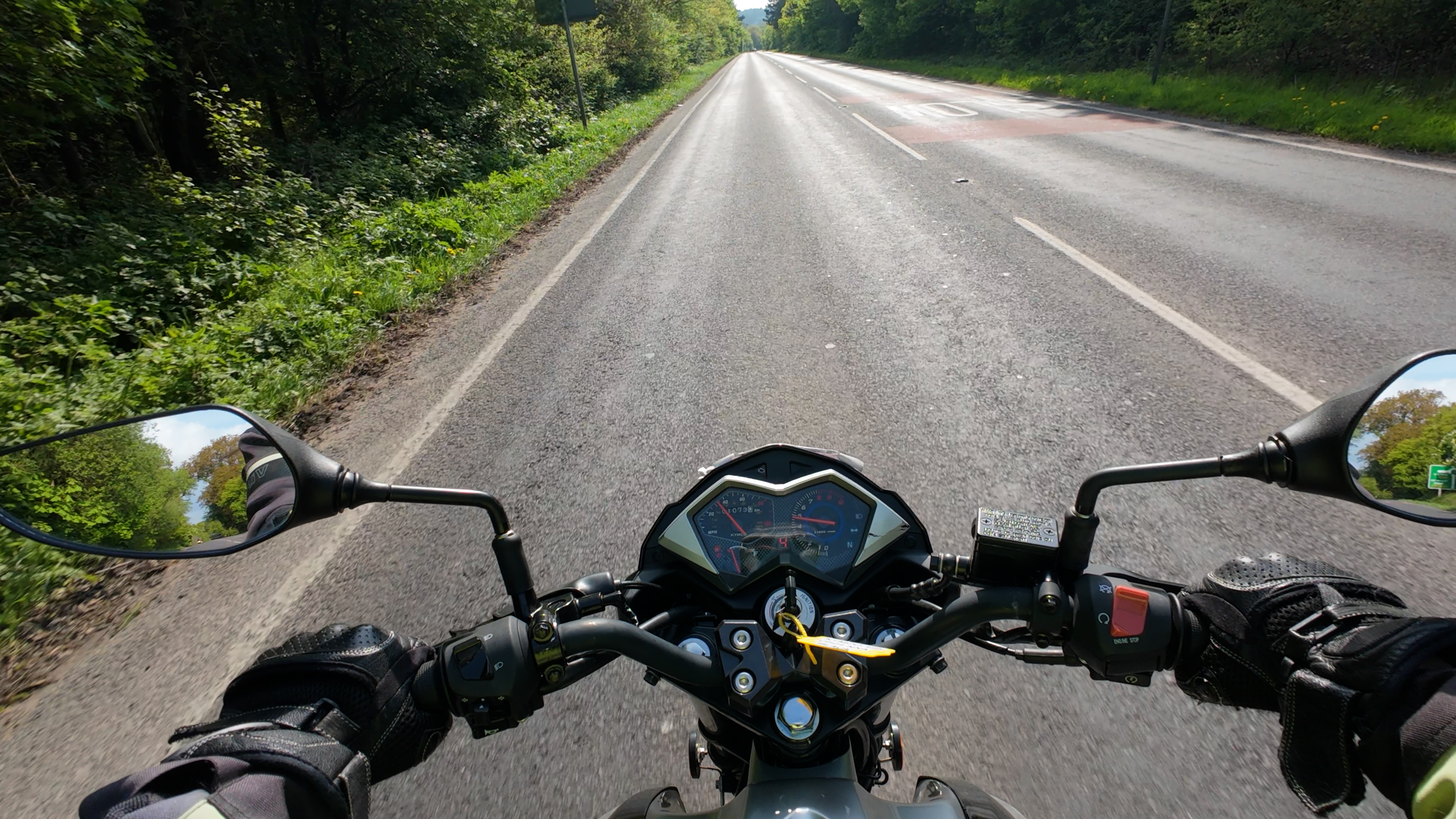
In most UK cities, a scooter is usually faster overall, especially across longer journeys or routes with lots of mixed traffic. You get steady pace, smoother acceleration, and less time lost to fatigue.
That said, Lime bikes can be surprisingly quick on the right route. They tend to perform best when:
- the cycle network is strong
- you can stay moving without constant stops
- you can take shortcuts through parks, quieter streets, or cycle-only routes
Scooters tend to perform best when:
- the route is heavy traffic and bus corridors
- you need consistent journey times
- you want to avoid arriving sweaty or worn out
One thing that often tilts the result is congestion. Filtering is legal in many situations in the UK when done safely, and it means scooters can keep moving when cars are stuck. It’s not about reckless weaving. Done properly, it’s simply a safer and more efficient way to make progress through slow traffic.
So if you need the simplest answer:
Scooters win on consistency. Lime bikes can win on specific routes with great cycle lanes.
Effort and comfort: the deciding factor for most commuters
This is the biggest everyday difference.
On a Lime bike, you still work. Even with assistance, you’ll feel it on longer rides and stop-start traffic. If you’re commuting to the office, that can mean arriving warm and flustered, especially if you’re pushing the pace.
On a scooter, the journey feels like travel rather than exercise. You’re not trying to keep momentum with your legs, and you’re not turning up looking like you’ve just finished a workout.
If your ideal commute is “get there quickly and still feel fresh”, scooters usually make more sense.
Cost and convenience: cheap to start vs better long-term routine
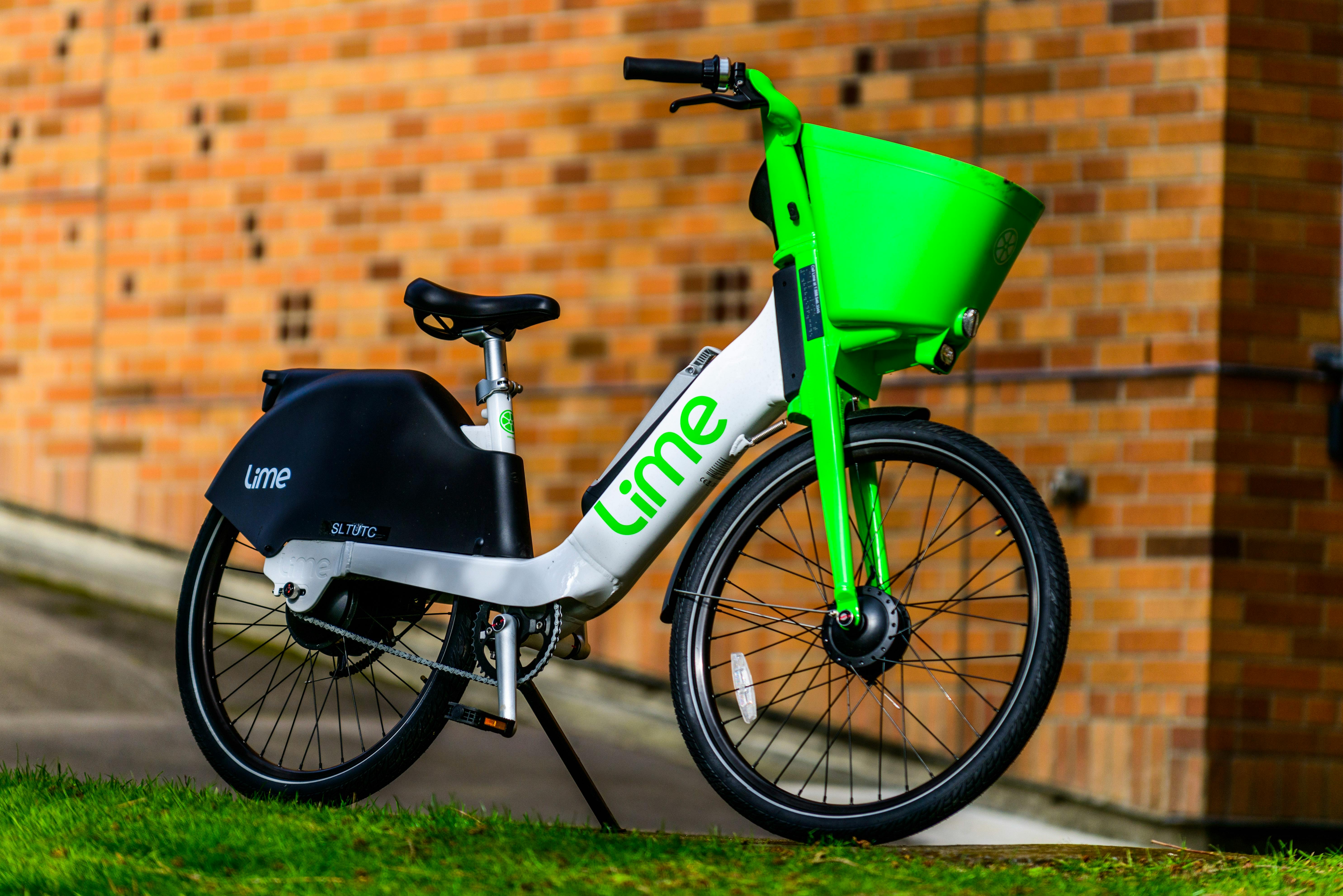
Lime is hard to beat for low commitment. No insurance, no servicing, no storage. You find one, ride, park, and walk away.
The trade-off is that availability and bike condition vary. Sometimes the nearest bike is missing, low battery, or just not in great shape.
Scooters cost more to get started, but once you have the routine set up they are consistent. Your scooter is always there, it behaves the same each day, and you are not hunting for a working bike at rush hour. If you commute regularly, that reliability starts to matter more than the upfront spend.
TL;DR should you choose a Lime bike or a scooter?
Choose a Lime bike if:
- your route has strong cycle lanes
- your trips are occasional or short
- you want the simplest option with no training
- you do not mind some effort
Choose a scooter if:
- you commute regularly and want predictable journey times
- you want to arrive without sweating
- your route is heavy traffic and bus routes
- you want a commute that feels easier and more enjoyable
The best next step if a scooter appeals
If the scooter option sounds like the one you’d stick with, the smartest next step is not buying a bike. It’s trying it out safely, under the supervision of a DVSA-certified instructor.
A CBT gives you a structured introduction to riding, road positioning, hazard awareness, and handling real traffic. It’s the quickest way to find out if moped or scooter commuting fits your life, without guessing and without committing too early.